fredag 15 juli 2011

Fusarium

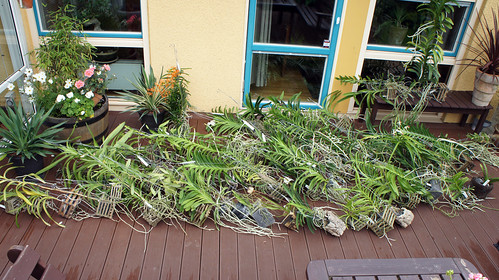
Phuuu, spent all day yesterday disinfecting the green house and cutting plants. All in all over 60 plants effected.

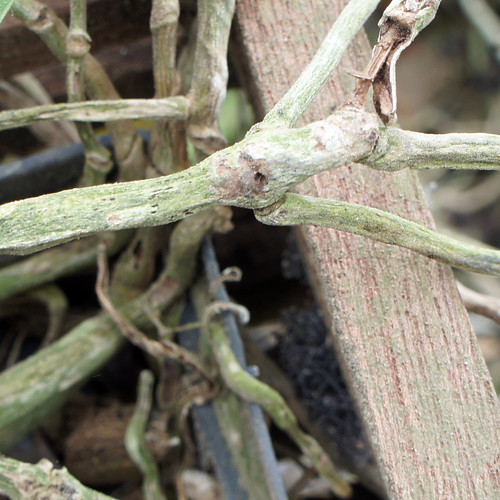
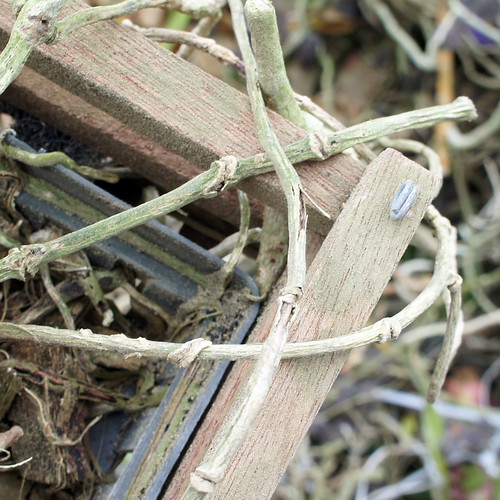
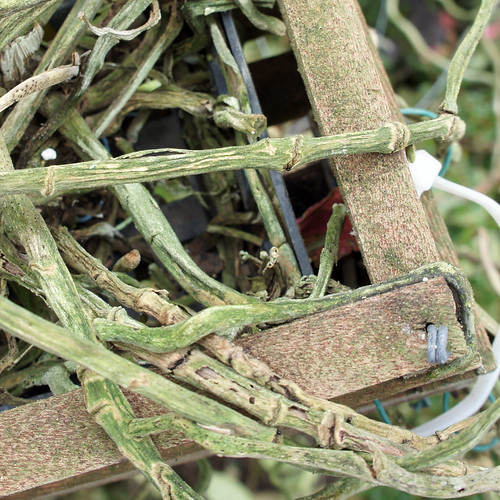
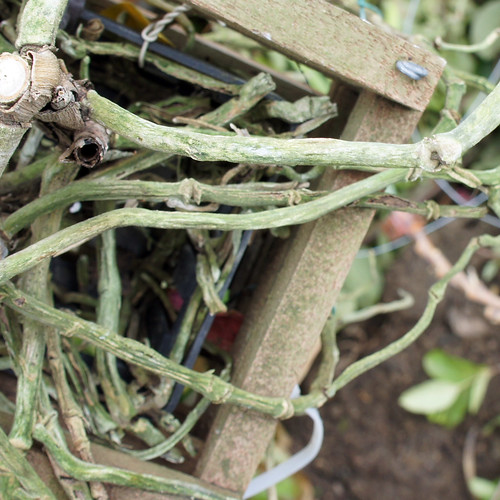
Here's how it looks when a Vanda root is infecterad with Fusarium. These pictures are the most affected plants. But I had plants with only one infected root where the fungus had traveled in to and up the steam. if you scratch/cut the root it will be red/brown instead of green.

You have to cut the steam until the cutting surface is pure green/yellow. Not showing any red or purple at the edges. See, "Cutting a Vanda" below to see what a clean cut looks like.

I lost some very good plants, but what can one do. Just go on doing what you like the most. Many thanks to Dr. Martin Motes for your help and information.

Waiting for a fungicide that can keep this fungus to a minimum.

onsdag 13 juli 2011

A disaster day

Today I nearly started to cry. I read a new book written by PhD Martin Motes about growing Vandas in Florida. There was a chapter with different pests and diseases. The was a picture of how a Vanda root infected with Fusarium looked. This looks familiar.


I started cutting some plants with roots looking like the picture in the book and the cuttings was discolored. So I ordered a fungucid the should help and it is coming next week. So today I have taken out all the plants on one side of the greenhouse. Going through plant by plant cutting all that looked suspicious. Then clean an disinfect the greenhouse. Tomorrow I have to do the same thing with the other side. It looks like 10 plants infected with Rhizoctonia and over 40 plants infected with Fusarium. Phuuu

måndag 11 juli 2011

Cutting a Vanda

Sometimes plants needs to be reduced in length. This one have had some fungus on it's mid leaves.
Before cutting make sure to water the roots carefully.
Sterilize the secateurs withe a flame.
Select a place to cut, make sure that you have at least three good roots on the top cutting.

Check the cutting surface to see if it is clear. The color should be green to yellow without any black or brown markings.
Use some kind of grafting wax to seal the cut.
Grafting wax is in place.
Anchor the top cutting well.
The lower half of the plant usually sets new plants when its cut.
Now you have two plants. :-)

Ascocenda Haad Ravai x Betty May Steel

A new cross from Kultana Orchids that looks very promising. I was thinking about crossing it with Renanthera citrina.


A favorite plant Renanetia Sunrise. It is almost always in flower.

lördag 9 juli 2011

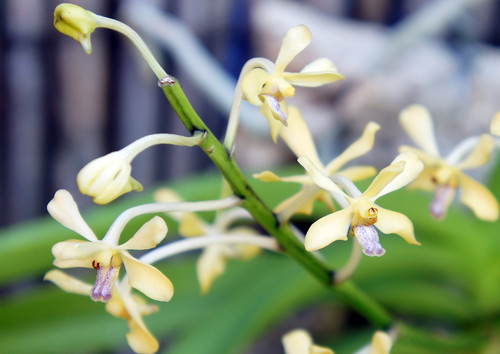
Vanda testacea


I finally manage to get a decent shoot of this miniature Vanda. I was thinking about crossing i with Ascocentrum miniatum or with Renanthera monachica. Hummmmm.

Vanda testacea (Lindley) Rchb. f.


SYNONYMS: Aerides testacea, Aerides wightiana, Vanda parviflora, Vanda vitellina.


HABITAT: This species is widespread in India, Ceylon, through the Himalayas eastward to Manipur, Burma, Yunnan Province in China and the mountains of northern Thailand. It generally grows at 300-1200m with temperatures between 6C to 30C.


LIGHT: 39000-50000lux (3500-4500 fc). Plants require bright light but may need some protection from direct midday sun. My plant don’t get this much light but it seems to do OK any way.


TEMPERATURES: I grow all my plants at the same temperatures. 15C as a minimum and the up to 40C some days in the summer. If plants are grown in temperatures over 30C you must make sure that you have a lot of air circulation.


HUMIDITY: Some ware between 50-90% is preferable.


WATER: Rainfall in the habitat is very heavy from late spring into autumn. In the winter it has a dry period of 3-4 month. My plant gets watered every day during the summer and about every other day the rest of the year.


FERTILIZER: My plants a fertilized about two times a week in the summer and every other week in the winter. I use Peters 20-20-20.


GROWING MEDIA: I grow my plant mounted on a cork slab. Plants are usually grown in hanging pots or slatted wooden baskets filled with open, fast-draining medium.


PLANT SIZE: The steam is usually short, 10-30 cm. But as for all monopodial epiphyte they can grow large with time. This one is a slow grower like Renanthera monachica that grow about two new leaves a year.


LEAVES: Are between 7,5-12,0 cm long and 1-1,2 cm wide.


INFLORESCENCE: 7.5-20.0 cm long.


FLOWERS: 6-15 per inflorescence. Flowers have yellow sepals and petals and a lavender or pink to purple lip and spur. They are small, measuring 1,2-2,0 cm across.
fredag 8 juli 2011

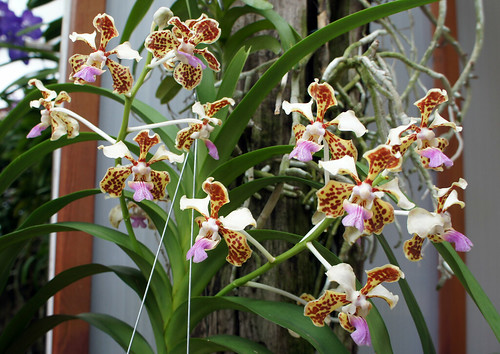
Vanda tricolor

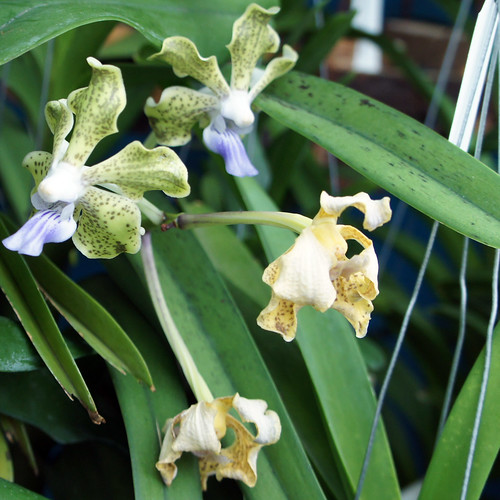
Here is my Vanda tricolor that I have had for many years. In our climate it only flowers ones a year. This plant was given to me by the botanical garden in Lund/Sweden as a small cutting.

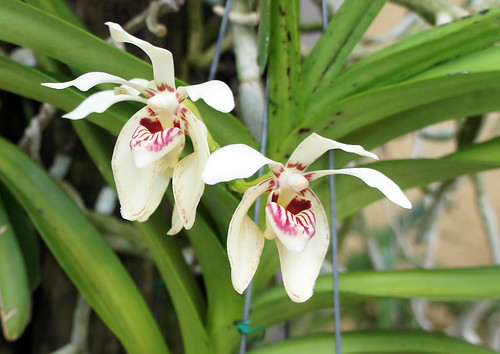
The Vanda pumila has now opened its three flowers, mmmm.

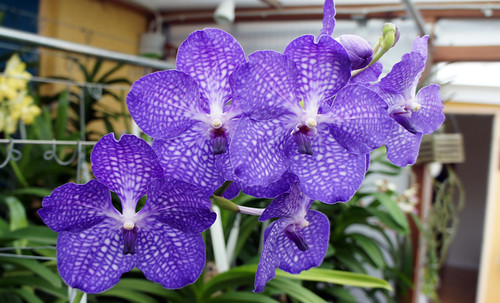
The size of the flowers on this Vanda Golamco's Blue Magic is starting to come to its maximum.

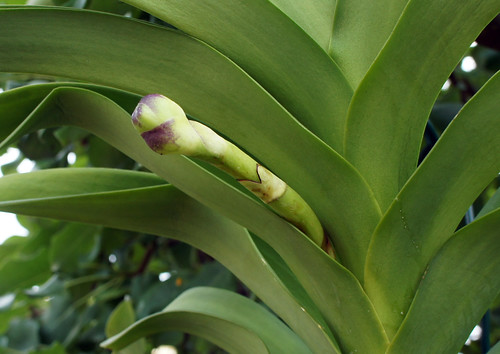
I did some pollination some days ago, here one can see the early result of the flower stalk swelling.

tisdag 5 juli 2011

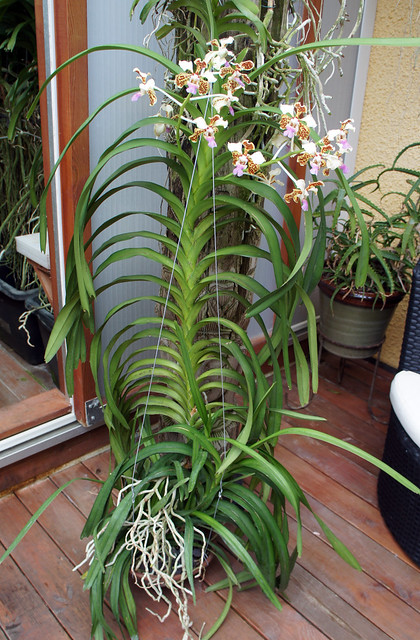
Vanda Manuel Torres

This plant didn't start flowering until it reached 1,6 meters. Today I is 2,3 meters and is now coming with a new spike. The flowers are enormous so it is worth the wait.


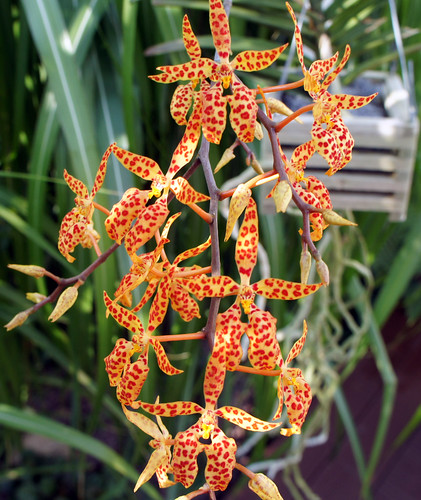
Renanthera monachica. One of the two spikes has opened its flowers.